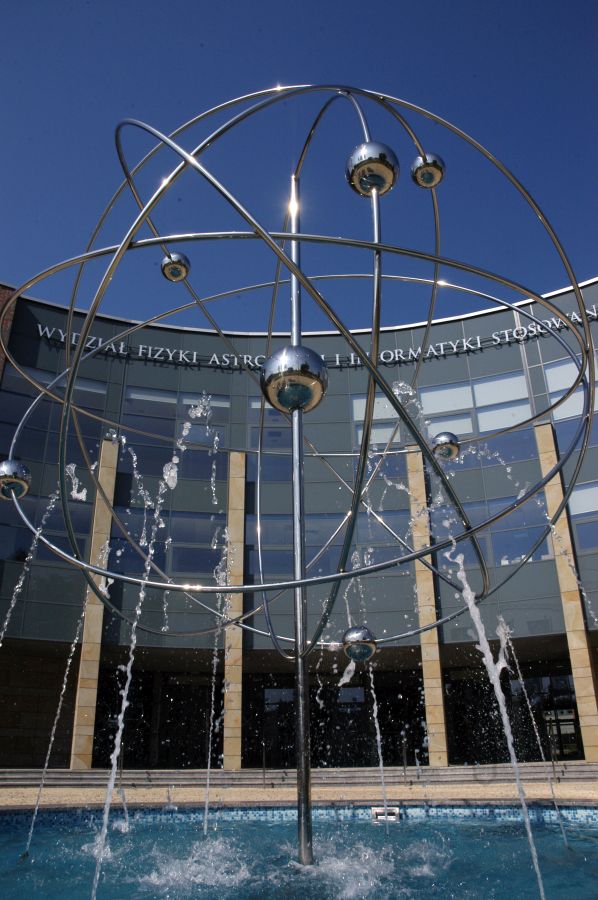
The Faculty of Physics, Astronomy and Applied Computer Science at the Jagiellonian Universityis one of the few institutions in the country to boast an A+ category in the discipline of physical sciences and the PKA Certificate of Excellence in Education for the Physics major. Winner of the title Symbol of the Synergy of Science and Business 2022, co-founder of the Frank Wilczek Prize for young Polish scientists.
In terms of its scientific and research work, the PAACS Faculty is a leading institution in Poland. Annually, scientists working at the Faculty publish approximately 500 papers, of which some 450 are published in international specialist journals included in the Thomson Reuters Master Journal List, otherwise known as the “Philadelphia List”.
Dozens of national and international research projects are currently underway, financed from the state budget and through structural funds or directly by the European Union and NATO. The Faculty also carries out investment projects that enhance its research potential and contribute to large international research projects in Europe and worldwide.
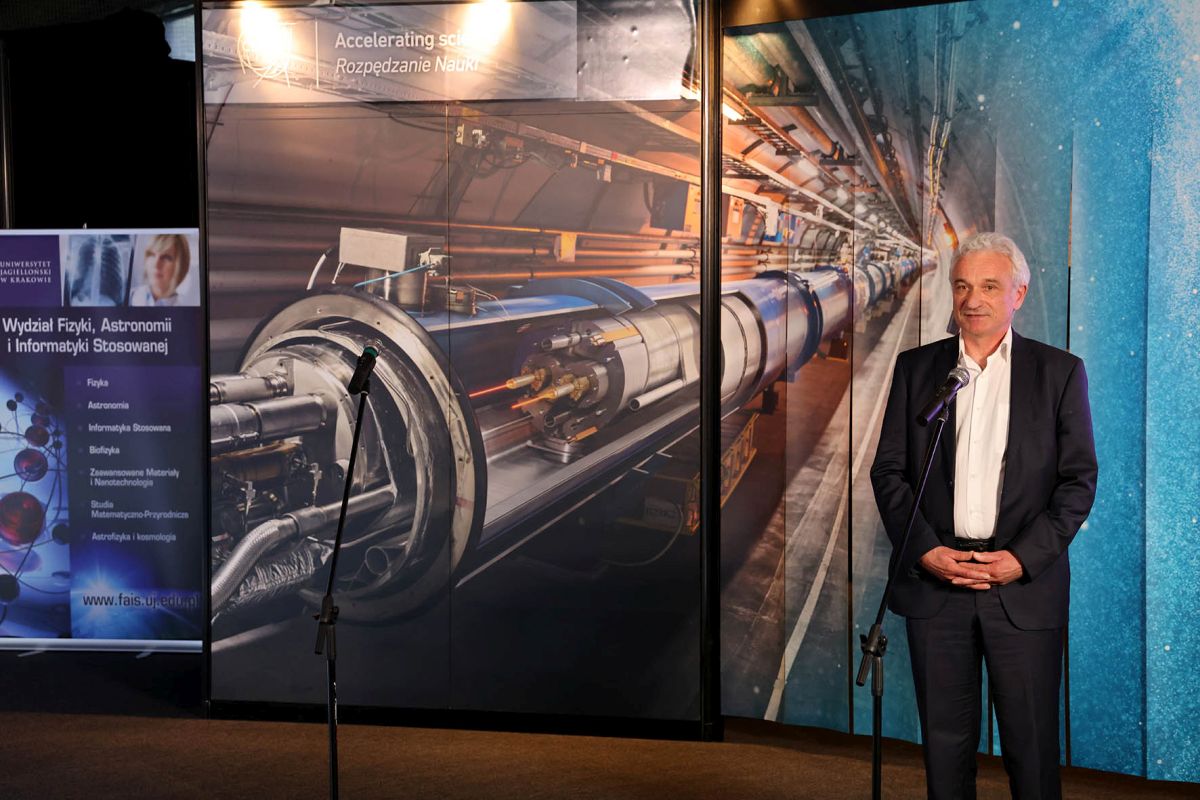
The Faculty engages in extensive cooperation with research centres from all over the world (e.g. DESY, CERN, GSI, PSI) and with the business environment (NOKIA, HSBC, Kamami.pl, Emerline, NaNiby Studio, Inglot, Comarch, ABB, Motorola, IMiGW).
Students can take courses in physics, physics for businesses, biophysics, astronomy, astrophysics and cosmology, applied computer science, computer games science and advanced materials and nanotechnology.
Achievements
- In 2012, the Marian Smoluchowski Kraków Research Consortium "Matter-Energy-Future", which includes the PAACS Faculty, was awarded the highly prestigious KNOW (National Scientific Leading Centre) status in the physical sciences for 2012-2017.
- As a result of the evaluation of Polish research institutions in terms of scientific achievements, scientific potential and the material effects of scientific activity, the Faculty was awarded the prestigious A+ category in the sciences and engineering group.
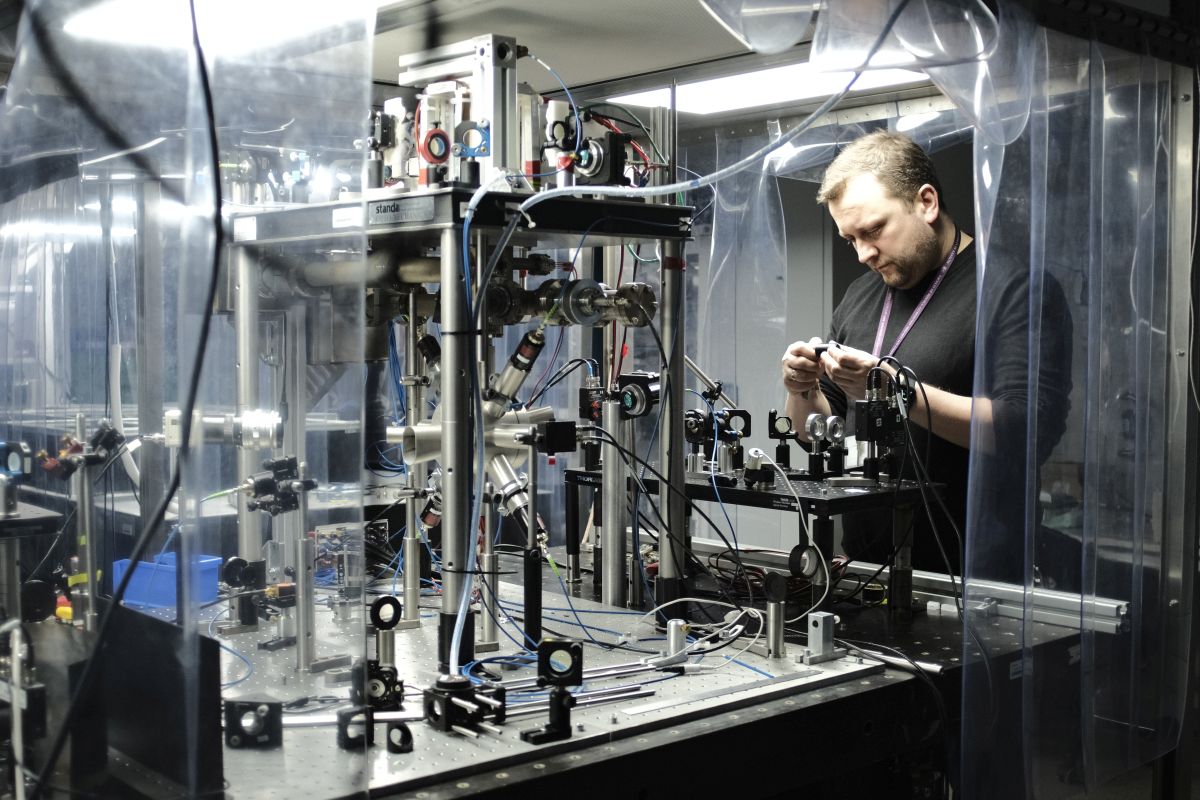
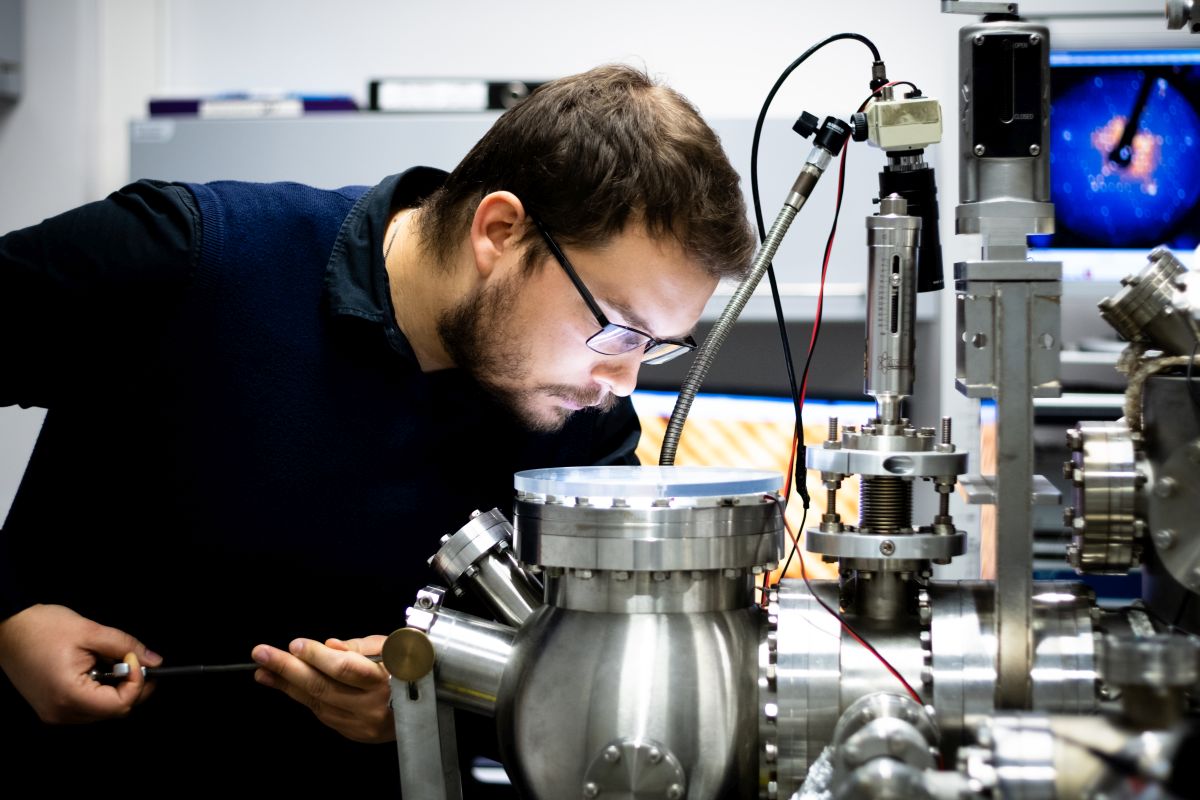
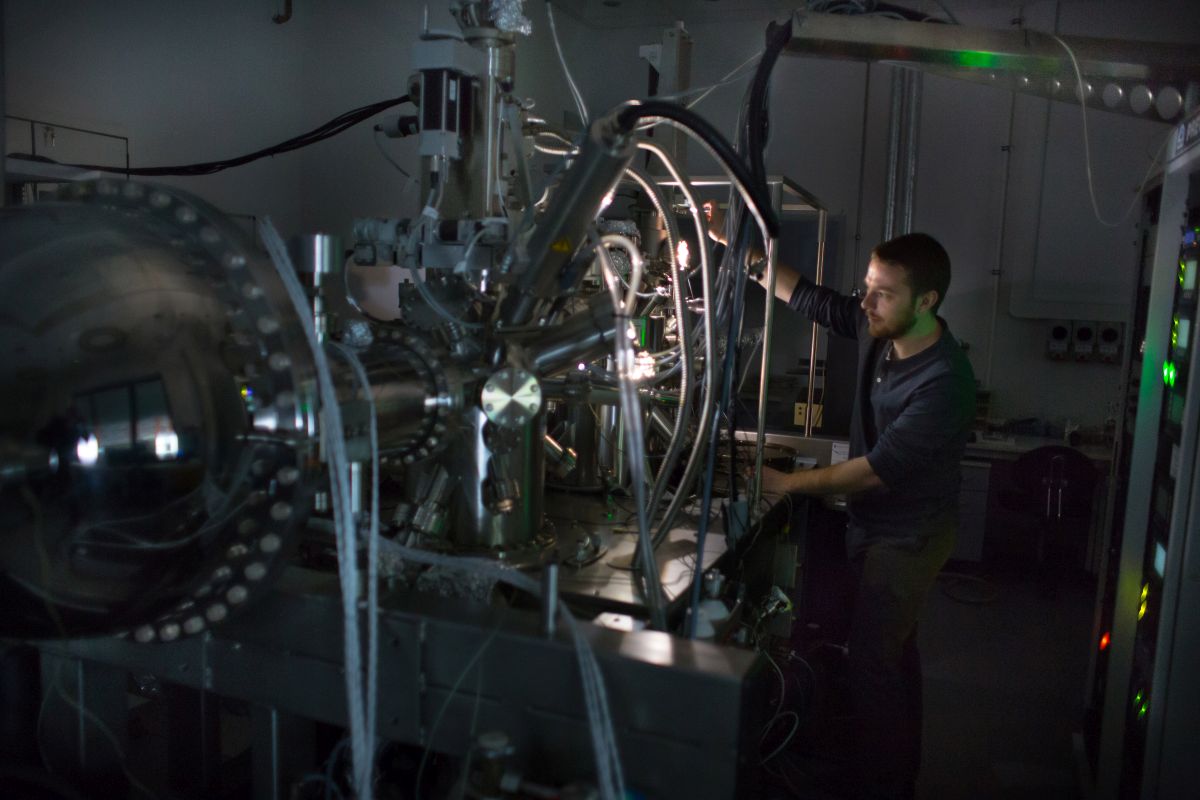
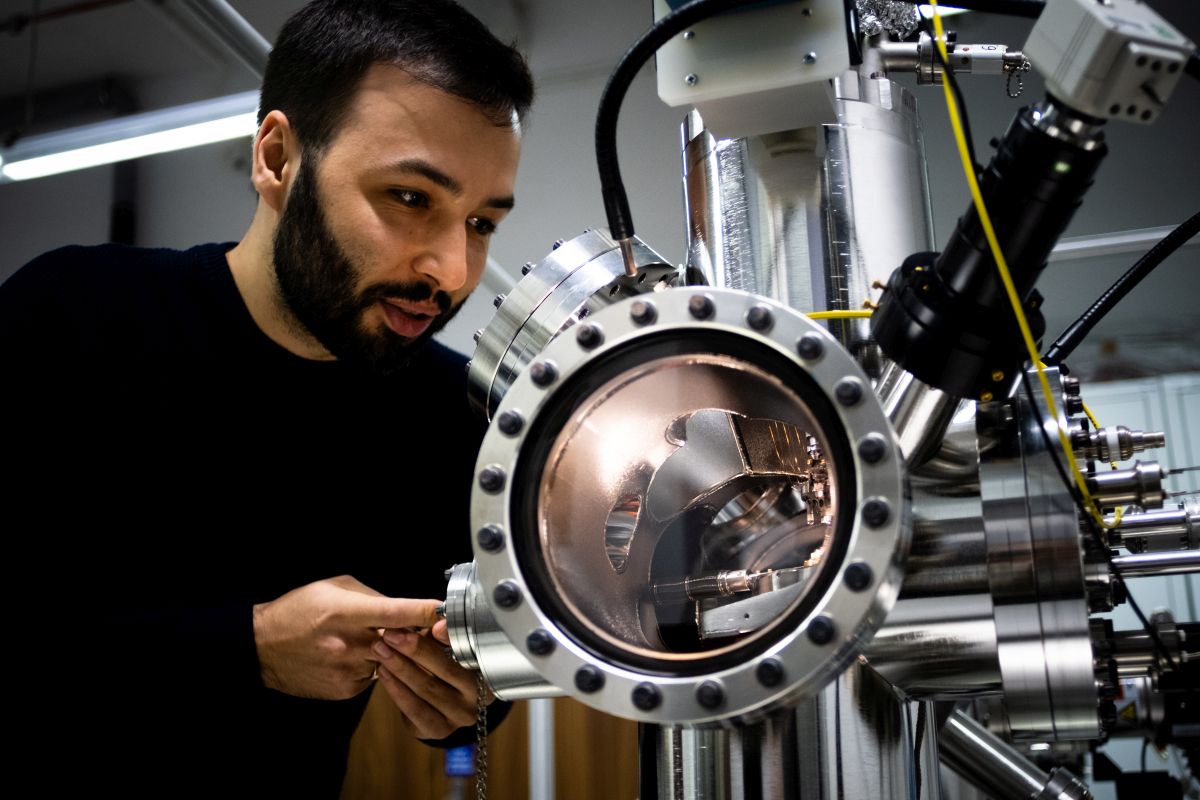
- The apparatus base is continuously being expanded - with the support of European programme funds, it has been possible in recent years to acquire sets of research equipment of the highest, sometimes even globally unique, class. The ATOMIN project is a case in point - in 2020, the PAACS Faculty together with the Faculty of Chemistry received nearly PLN 68 million in funding for the ATOMIN 2.0 project.
- On the initiative of researchers from the Institute of Physics, the National Synchrotron Radiation Centre SOLARIS is built on the 3rd Campus of the Jagiellonian University. This is the first such device not only in our country, but also in our part of Europe. A synchrotron is a type of particle accelerator that emits high-intensity electromagnetic radiation. It is used for research in physics, chemistry, materials science, geology, mineralogy, biochemistry, pharmacology, biology, and medicine, among others.
- Development of a method for imaging the lungs using 3He polarised helium. Owing to this method it was possible to successfully obtain in Poland (in collaboration with the John Paul II Hospital in Krakow) the first images of human lungs using magnetic resonance imaging.
- Accession to the construction of a Polish optical atomic clock. As part of the collaboration, a new generation clock is being built at the FAMO National Laboratory, using ultra-precise lasers to measure frequencies in laser-cooled atoms.
- A modular positron tomograph is being developed, allowing imaging of the entire body, detecting tumours throughout the body at the same time, and even determining the degree of malignancy and targeting cancerous lesions with the most effective therapies. The results of the work of Professor Paweł Moskal's team within the TEAM programme of the Foundation for Polish Science (FNP), are pioneering on a global scale.
- Professor Krzysztof Sacha developed a mechanism for the spontaneous breaking of discrete translational symmetry in time, called discrete time crystals, thus giving rise to a new and strongly developing scientific concept (time crystals are a scientific idea in which atoms or ions regularly organise themselves in time, i.e. they move cyclically) and achieved an experimental creation of discrete time crystals.
- The HYADES project will develop a dedicated space telescope to observe hydrogen and deuterium around small bodies in the Solar System. The task of this project is to determine the origin of water on our planet and to search for new, previously unknown water reservoirs in the Solar System and other planetary systems.
Cooperation
An example of extensive international cooperation is the participation of scientists from the Faculty of Physics, Astronomy and Applied Computer Science in the BOREXINO solar neutrino research project (“Boron solar neutrino experiment”). During its implementation, the existence of geoneutrinos was directly confirmed, and it also enabled the most accurate measurement of the velocity of neutrinos emitted in the CERN laboratory. The results obtained are of fundamental importance for astrophysics, particle physics and geophysics.
Researchers collaborating on the BOREXINO experiment in 2021 were awarded the prestigious Giuseppe and Vanna Cocconi 2021 prize for outstanding achievements in particle astrophysics and cosmology.
In 2023, Professor Marcin Wójcik (winner of the Polish Prime Minister's Award for outstanding scientific achievement related to the BOREXINO experiment), Dr. Grzegorz Zuzel, Professor of the Jagiellonian University, and Dr. Marcin Misiaszek were awarded the Prize of the Minister of Education and Science for their fundamental contribution to the BOREXINO experiment, which enabled measuring the fluxes of solar neutrinos of the pp and CNO types.
http://www.fais.uj.edu.pl
https://www.facebook.com/FAISUJ
https://www.instagram.com/fais_uj/
https://www.youtube.com/wydzialFAIS